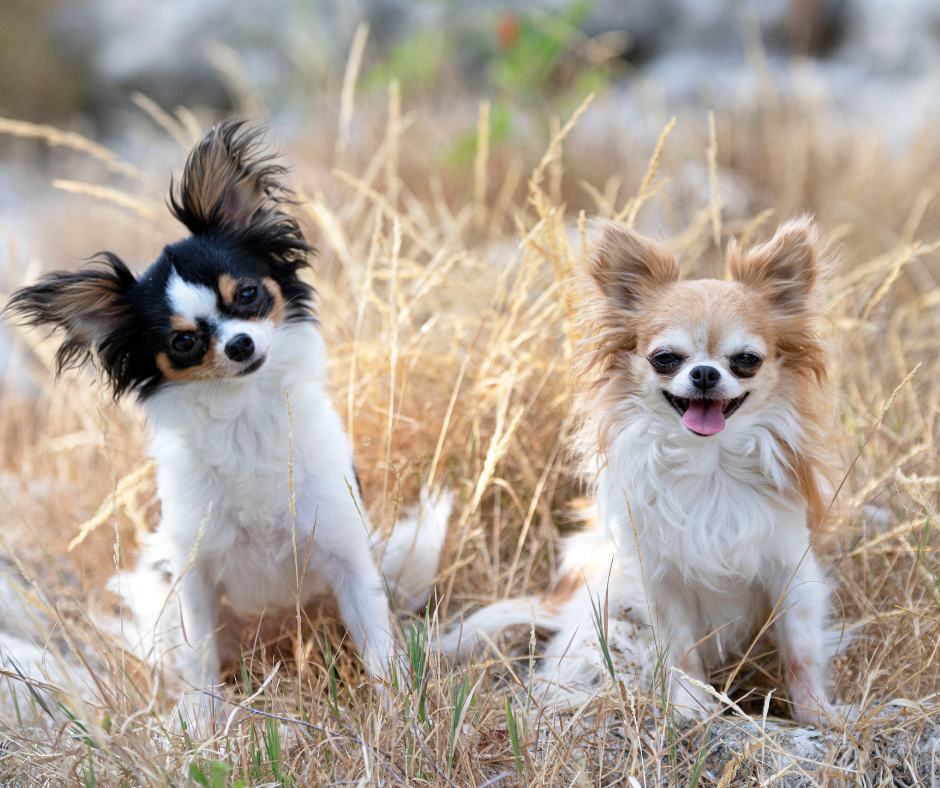
Are you trying to manage chihuahua biting?
Perhaps your chihuahua growls when you reach towards them, snaps when you try to pick them up, or bites when you put their harness on.
Chihuahua biting is a common behaviour problems I help owners with, and it’s also one of the most misunderstood.
Many people assume their dog is being stubborn, dominant, naughty or aggressive.
In reality, biting is usually the end of a much longer story.
Your chihuahua didn’t wake up one morning and decide to bite you.
They’ve learned to predict something they don’t like, and over time they’ve decided the best way to stop it happening is to defend themselves.
Chihuahua Biting Starts Long Before Teeth Are Involved
Every behaviour has a reason.
When we understand why a dog bites, we stop looking at the teeth and start looking at what’s happening inside the dog’s mind.
There are two concepts that explain almost every behaviour problem I see:
- Arousal – your dog’s emotional temperature.
- Prediction – what your dog thinks is going to happen next.
These two things are closely linked.
The more concerned your dog becomes about what’s coming next, the higher their arousal rises.
The higher their arousal, the more likely they are to expect something unpleasant.
Eventually, it becomes a cycle.
A worried dog predicts bad things are about to happen.
Those predictions increase arousal.
Higher arousal makes those negative predictions even stronger.
Unless we interrupt that cycle, behaviour often continues to escalate.
How Chihuahua Biting Can Accidentally Develop
This is rarely about bad owners.
Most people are simply trying to care for their dog.
Unfortunately, everyday handling can unintentionally teach a dog that people predict discomfort.
Pushing a Harness Over Their Head
Perhaps your puppy wasn’t comfortable wearing a harness.
Instead of helping them feel confident around it, we often push it over their head because we need to leave the house.
The harness becomes something they tolerate rather than something they feel good about.
Soon your hand reaching towards their head predicts the harness.
The concern starts before the harness even appears.
Pulling Clothes Over Their Head
Jumpers and coats can feel restrictive.
Some dogs cope perfectly well.
Others find the whole experience worrying.
If every time your hand reaches towards them it means clothing being pulled over their face, they begin predicting that uncomfortable feeling.
Again, your movement becomes the trigger.
Picking Them Up Without Consent
Because chihuahuas are small, many are picked up countless times every day.
Sometimes they’re asleep.
Sometimes they’re resting.
Sometimes they simply don’t want to be moved.
When a dog loses choice repeatedly, they can begin predicting that every approaching hand means they’re about to lose control.
Over time they may decide they need to stop that happening.
Tapping Them on the Nose
Thankfully, most trainers have moved away from this old-fashioned advice.
Years ago, people were often told to tap puppies on the nose if they bit.
The problem is that punishment doesn’t teach a dog to feel safe.
Instead, it teaches them that human hands sometimes predict discomfort.
That prediction changes how the dog feels every time someone reaches towards them.
Understanding the Ladder of Communication
One of the most important aspects of stopping chihuahua biting is understanding the ladder of communication.
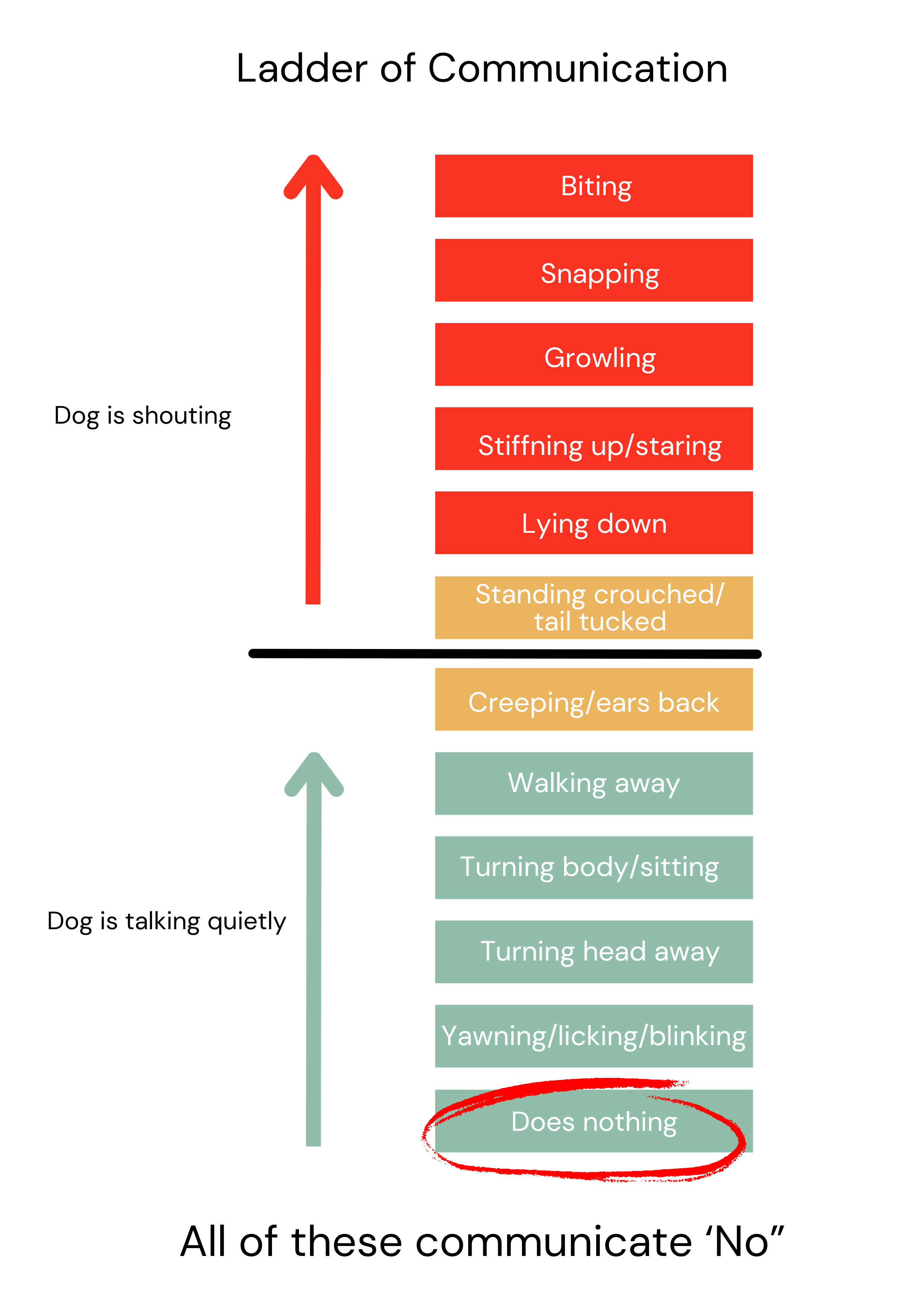
Everything on this ladder is your dog’s way of saying:
“No, I don’t want this.”
Long before a dog bites, they’re usually trying to communicate that they’re uncomfortable.
They may turn their head away, lick their lips, yawn, freeze, become still, move away or growl or it could be a simple ‘does nothing’. They don’t actively move towards you to engage.
These behaviours aren’t your dog being awkward or stubborn. They’re valuable information.
They’re telling you they don’t feel comfortable with what they think is about to happen next.
Unfortunately, these early signals are often missed, misunderstood or ignored.
Sometimes they’re incredibly subtle.
Sometimes we’re in a hurry.
Sometimes we carry on because we need to put the harness on, wipe muddy paws, pick the dog up or complete whatever we were doing.
From the dog’s point of view, however, every time those early “no thank you” signals are ignored, they learn something important.
The quieter forms of communication don’t work.
So next time they move one step higher up the ladder.
If those signals are ignored again, they move higher still.
Eventually, the dog reaches the point where they feel they have no option but to snap or bite.
The bite wasn’t the first thing they tried.
It was simply the only thing that successfully stopped what they believed was about to happen.
The real concern comes when this happens repeatedly.
A dog that learns their subtle communication is ignored may stop using it altogether.
Instead of freezing or growling first, they may go straight to snapping or biting because that’s the behaviour that has worked in the past.
This is why recognising the early stages of the ladder of communication is so important. It allows us to respond while our dog is still asking politely, rather than waiting until they feel they have to shout.
Ask Yourself One Simple Question
If you’re trying to stop chihuahua biting, don’t just focus on the bite itself.
Instead, ask yourself:
“What does my chihuahua think is going to happen next?”
Then ask one more question:
“Why does my dog feel the need to defend themselves?”
When you begin looking at behaviour this way, everything starts to make more sense.
The bite isn’t random.
It isn’t spiteful.
It isn’t your dog trying to take charge.
It’s communication from a dog that believes they need to protect themselves from something they think is about to happen.
Once you understand what your chihuahua is predicting, you can begin changing those predictions.
Teach It, Don’t Inflict It
The reality is that we all need to do things to our dogs that they may not particularly enjoy. Harnesses need to go on, nails need trimming and paws sometimes need wiping.
The goal isn’t to avoid these things, but to teach your dog the skills to cope with them.
If handling causes stress, ask yourself:
“What skills does my dog need for this to be a success?
Then teach that behaviour in small, achievable steps and give it value for your dog